A data-driven, mobile-first redesign of the Year/Make/Model landing page that drove a +40% conversion lift over 6 months.
Custom Offsets is one of the USA's largest aftermarket wheel and tire e-commerce platforms, serving truck and SUV owners nationwide. The Year/Make/Model (YMM) landing page is the primary entry point for product discovery — and on mobile, it was underperforming.
Users struggled to navigate to sub-category pages, engagement was low, and conversion rates reflected that friction. As Lead UI/UX Designer, I owned the end-to-end redesign — from data discovery through stakeholder alignment, design execution, and post-launch measurement over 6 months.
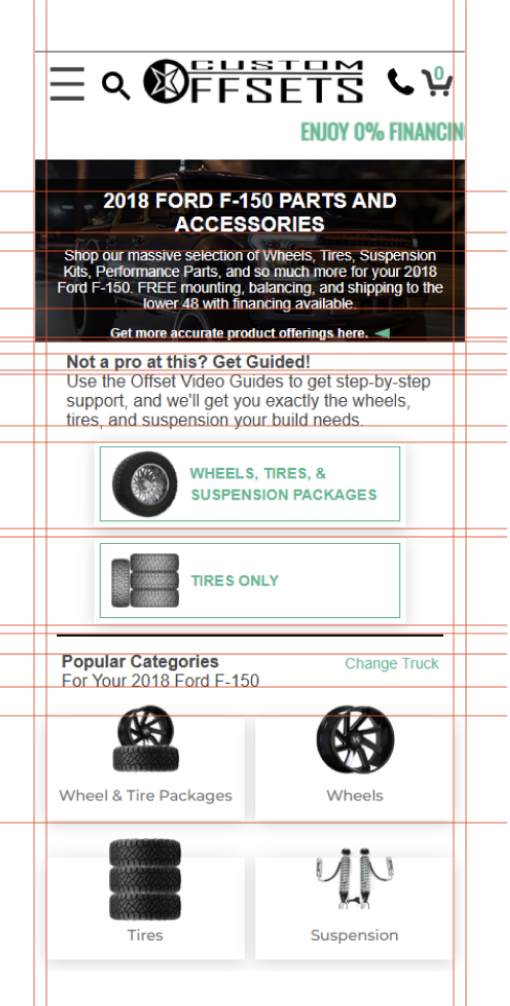
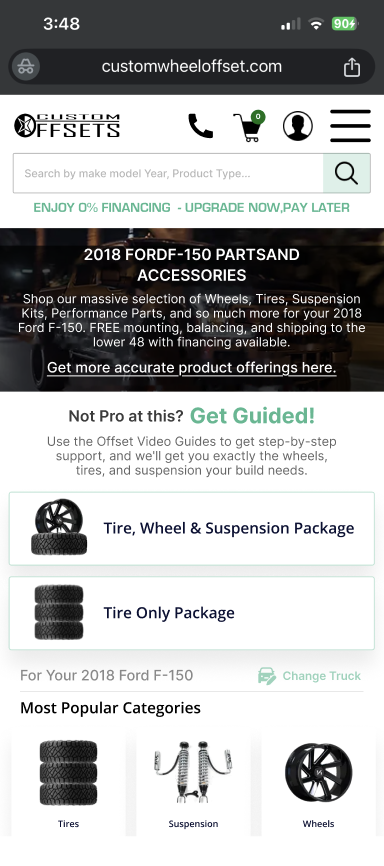
Full-width before/after or project overview screenshot
Analytics and behavioral data painted a clear picture — mobile users were landing and leaving without converting. Three core issues were driving the drop-off.
Users scrolled past key CTAs without interacting. Heatmaps showed cold spots around product cards and session recordings revealed confusion between static and interactive elements.
High drop-off before YMM selector completion. Tap targets were too small for reliable mobile interaction and visual clutter competed with the primary purchase CTA.
Sub-categories were buried in secondary navigation. The mobile menu was ordered for desktop conventions — there was no direct path from a landing card to relevant sub-category content.
A structured 4-phase approach from raw data to measured outcomes.
Five targeted interventions designed to remove friction and drive intent to conversion.
Repositioned page sections to match mobile shopping intent — YMM selector moved above the fold, promotional content deprioritized. Users immediately see the most important action.
Replaced generic hero images with high-impact, context-rich vehicle photography that resonated with the truck/SUV audience and created stronger visual engagement on first scroll.
Redesigned all interactive elements — buttons, filters, card areas — to meet and exceed mobile touch target standards, eliminating misclick frustration across the board.
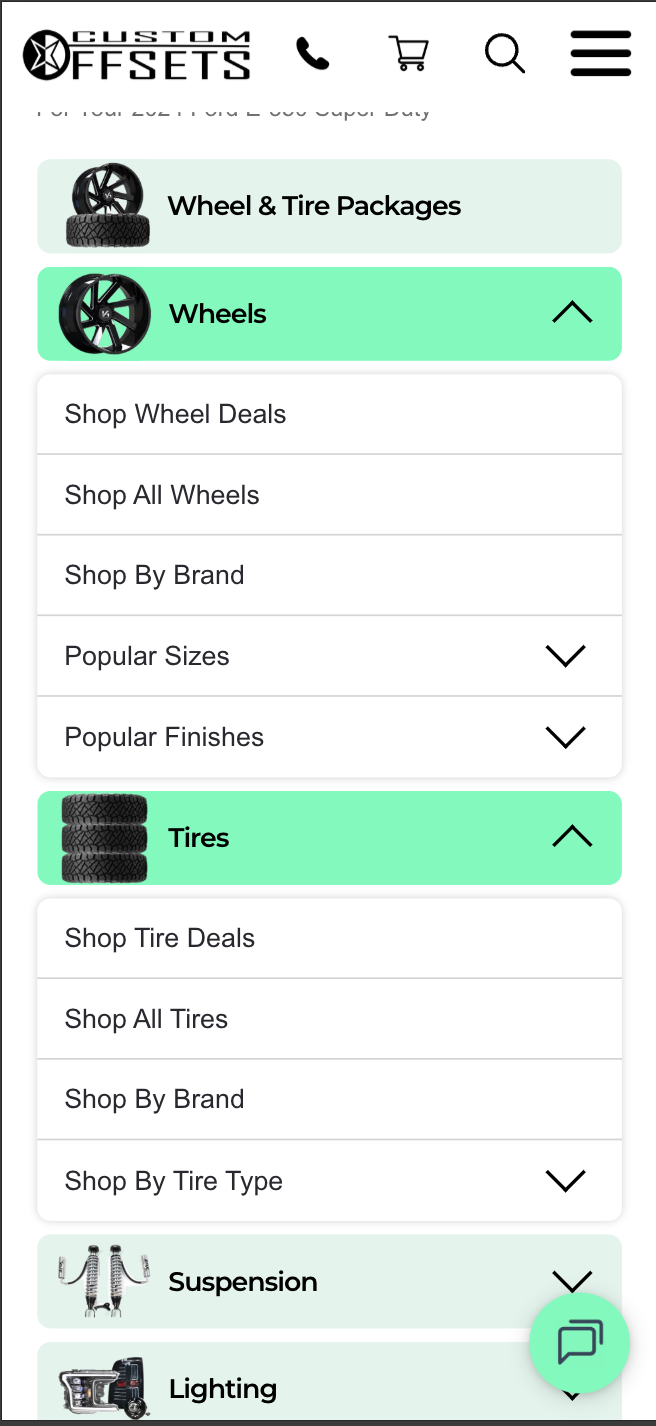
Added inline sub-category dropdowns directly within main product cards. When a user taps a card, sub-categories expand in place — keeping users on-page and cutting navigation steps.
Immediate impact from launch, compounding through continuous post-launch iteration.